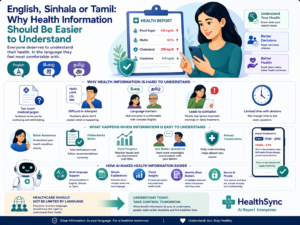

Why Health Information Should Be Easier to Understand
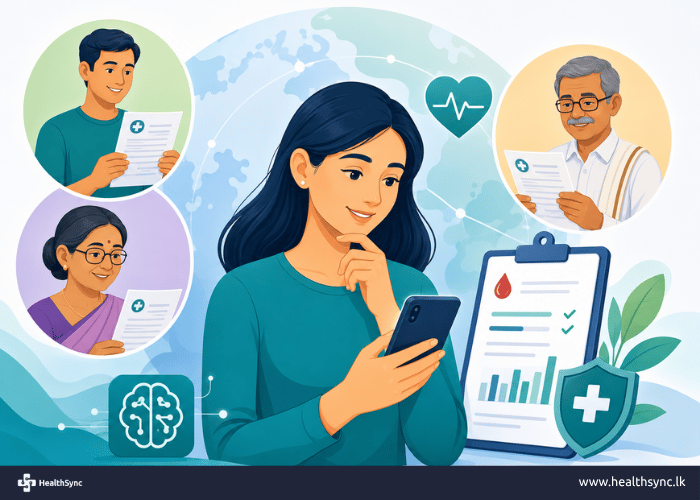
Imagine receiving an important medical report and not fully understanding what it says.
You recognize a few words.
You see some numbers highlighted in red.
But beyond that, everything feels confusing.
For millions of people, this is a very real healthcare challenge.
Not because they don’t care about their health.
But because medical information is often written in language that feels difficult, technical, and inaccessible.
In a multilingual country like Sri Lanka, this problem becomes even bigger.
Health Information Should Be Understandable for Everyone
Healthcare decisions affect every part of life.
People need to understand:
- blood test reports
- prescriptions
- diagnoses
- medication instructions
- lifestyle recommendations
- chronic disease risks
But many medical reports are written almost entirely in technical English.
This creates a gap between:
- receiving healthcare information
and - truly understanding it
- And when people do not fully understand their health information, they may:
- ignore important warning signs
- delay medical care
- misunderstand treatment instructions
- feel anxious or overwhelmed
Language Barriers Affect Real Health Outcomes
For many Sri Lankans, Sinhala or Tamil is the language they are most comfortable reading and speaking.
Even people who understand conversational English may struggle with:
- medical terminology
- abbreviations
- laboratory measurements
- clinical explanations
For example, terms like:
- HbA1c
- triglycerides
- creatinine
- hypertension
- prediabetes
may feel intimidating without proper explanations.
Healthcare becomes much more empowering when people can understand information in their preferred language.
Understanding Builds Confidence
When patients clearly understand their reports, they become more engaged in their own healthcare journey.
They are more likely to:
- monitor chronic conditions
- ask better questions
- follow medical advice
- identify health risks earlier
- make healthier lifestyle decisions
Simple understanding can lead to stronger long-term health awareness.
And sometimes, even small explanations can reduce fear and confusion significantly.
Why AI Can Help Bridge the Gap
Artificial intelligence is creating new opportunities to make healthcare information easier to understand.
Instead of presenting only technical values and medical jargon, AI can help explain:
- what a result means
- whether a value is normal
- why it matters
- what should be monitored
- possible next steps
Most importantly, AI can help translate complex medical concepts into simpler language.
This is especially valuable in multilingual healthcare environments.
Healthcare Should Not Be Limited by Language
One of the biggest problems in healthcare today is accessibility.
Not everyone has:
- immediate access to doctors
- time to research medical terms
- confidence to interpret reports independently
When health information becomes easier to understand in English, Sinhala, and Tamil, more people can:
- stay informed
- become proactive
- participate more confidently in healthcare decisions
This is not just about convenience.
It’s about making healthcare more inclusive.
Making Medical Reports Easier to Understand
HealthSync’s AI Report Interpreter is designed to help users understand medical reports in simpler, patient-friendly language.
Users can receive explanations in:
- English
- Sinhala
- Tamil
making health information easier to access for more Sri Lankans and families.
Instead of only displaying numbers, the system helps explain:
- abnormal values
- diabetes markers
- cholesterol results
- health trends
- lifestyle considerations
while securely storing reports for future reference and tracking.
Better Understanding Leads to Better Health Decisions
Healthcare should never feel intimidating simply because of language barriers.
People deserve to understand:
- what is happening inside their body
- what their reports mean
- what changes they should pay attention to
Because informed patients are more confident, more proactive, and often better prepared to manage their health over time.
And in the future, healthcare technology should not only become smarter.
It should become easier for everyone to understand.