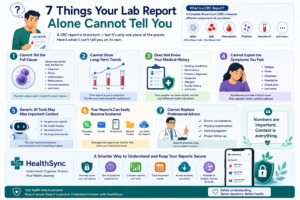

7 Things Your Lab Report Alone Cannot Tell You
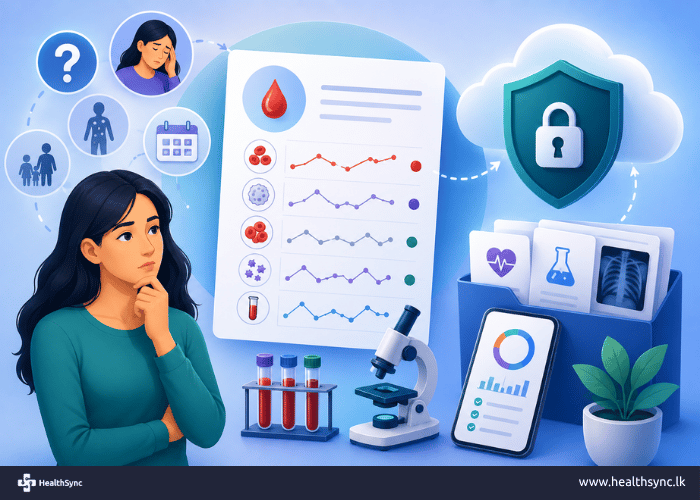
A CBC report arrives in your inbox.
You open it.
Immediately see a few values highlighted in red.
And naturally, your mind starts racing.
“Is this dangerous?”
“Do I have an infection?”
“Why is my white blood cell count high?”
“Should I be worried?”
This is exactly why so many people now upload lab reports into AI tools or search Google for explanations.
But here’s something important many people don’t realize:
A lab report alone does not tell the full story about your health.
Even a detailed blood test like a CBC (Complete Blood Count) is only one piece of a much larger picture.
First, What Is a CBC Report?
A CBC (Complete Blood Count) is one of the most common blood tests performed worldwide.
It helps measure different components of your blood, including:
- White Blood Cells (WBC)
- Red Blood Cells (RBC)
- Hemoglobin
- Platelets
- Hematocrit
- Neutrophils
- Lymphocytes
Doctors often use CBC reports to help identify:
- infections
- anemia
- inflammation
- immune system responses
- blood disorders
- overall health conditions
But even though CBC reports are extremely useful, they still have limitations when viewed alone.
1. A CBC Report Cannot Tell the Full Cause Behind Abnormal Results
For example:
a high white blood cell count may indicate:
- a temporary infection
- stress
- inflammation
- medication effects
- immune reactions
The number alone does not automatically reveal the exact reason.
Doctors usually combine:
- symptoms
- medical history
- physical examination
- additional tests
before making conclusions.
2. One Report Cannot Show Long-Term Trends
A single CBC report is only one snapshot in time.
What matters more is:
- whether values are improving
- whether counts are becoming unstable
- whether patterns are repeating over months or years
For example:
slightly low hemoglobin today may not seem alarming.
But if previous reports show a steady decline over time, the situation becomes much more important.
This is why continuity matters in healthcare.
3. A Lab Report Does Not Know Your Medical History
Your report alone does not explain:
- existing medical conditions
- medications you take
- previous diagnoses
- chronic illnesses
- surgeries
- allergies
- pregnancy status
- family history
Two people can have very similar CBC values but completely different medical situations.
That context changes how doctors interpret the results.
4. Reports Cannot Explain Symptoms You Are Experiencing
A CBC result cannot fully understand:
- fatigue
- chest pain
- headaches
- dizziness
- fever
- weight loss
- breathing difficulties
Symptoms often provide critical clues that blood reports alone cannot capture.
Healthcare is never just about numbers.
It’s about understanding the whole patient.
5. Generic AI Tools May Miss Important Context
Today, many people upload CBC reports into public AI tools like ChatGPT or Gemini for explanations.
While these tools can simplify medical language, they often do not know:
- your previous reports
- your long-term health trends
- medications
- chronic conditions
- clinical history
This can sometimes lead to:
- incomplete interpretations
- generic advice
- unnecessary fear
- false reassurance
AI can help explain reports.
But healthcare still requires proper medical context and continuity.
6. Your Reports Can Easily Become Scattered
One of the biggest healthcare problems today is disorganization.
Medical reports often end up:
- inside WhatsApp chats
- buried in emails
- saved as screenshots
- lost in folders
- forgotten during emergencies
Then when you actually need the report later, it becomes difficult to find.
Healthcare works better when records remain:
- secure
- organized
- accessible
- connected over time
7. A Lab Report Alone Cannot Replace Professional Medical Advice
This is one of the most important points.
A CBC report can provide clues.
It can raise concerns.
It can support diagnosis.
But it cannot replace:
- doctor consultations
- physical examinations
- clinical judgment
- proper medical follow-up
AI tools should support healthcare understanding — not replace qualified healthcare professionals.
A Smarter Way to Understand and Organize Your Reports
HealthSync’s AI Report Interpreter is designed to help users better understand reports like CBC tests while keeping records securely organized in one place.
Instead of disconnected screenshots and temporary AI chats, users can:
- securely store lab reports
- receive AI-powered explanations
- compare reports over time
- track important trends
- access reports later when needed
- view explanations in English, Sinhala, or Tamil
This creates a more organized and meaningful healthcare experience.
Because understanding your health is not just about reading one report.
It’s about understanding the bigger picture behind your health journey.